
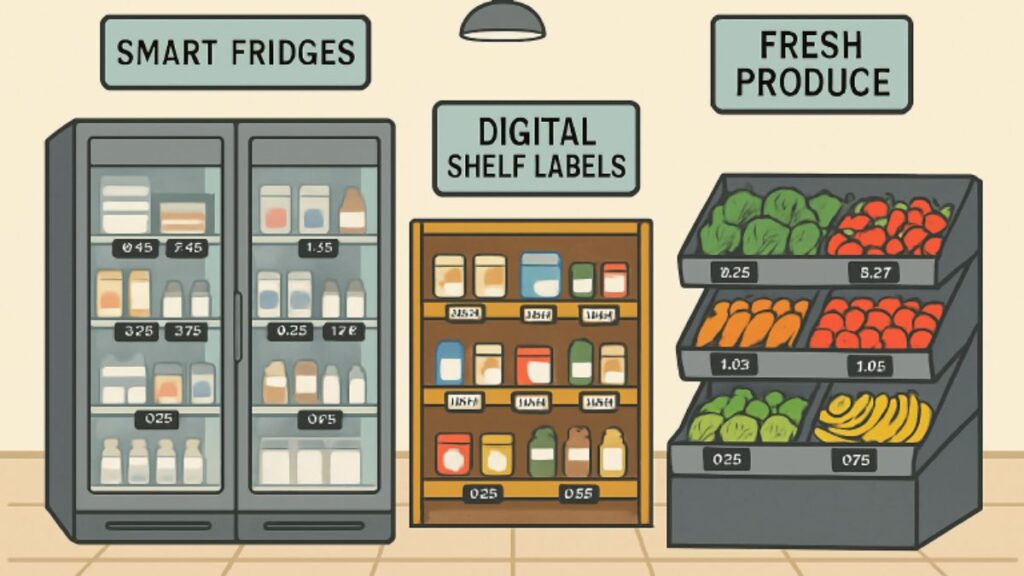
In today’s competitive grocery industry, retailers must continually adapt to new food safety measures and innovative display strategies to remain competitive. Embracing intelligent technology advancements and design trends is no longer just for efficiency—it is critical for maintaining consumer trust and achieving sustainable growth. Modern concepts, such as IoT-enabled smart refrigeration, dynamic pricing models, and hot food displays, enable grocers to optimize operations and deliver fresher products while enhancing the in-store experience.
These strategies also offer tangible benefits like reduced food waste, improved supply chain transparency, and increased profitability. From revolutionary packaging solutions that prolong shelf life to AI-powered inventory management systems, retailers are rethinking how products are displayed, tracked, and sold. This holistic approach, combining safety with smarter merchandising, is shaping the future of grocery retail.
Smart Refrigeration Technologies
The integration of Internet of Things (IoT) and artificial intelligence into supermarket refrigeration systems is helping retailers maintain food quality and safety more reliably than ever before. IoT sensors deliver real-time data on temperature and equipment status, so store managers are immediately alerted to deviations that could threaten the integrity of perishable foods. Predictive maintenance powered by AI can detect and resolve potential issues with refrigeration before breakdowns occur, ultimately saving retailers from costly inventory losses and equipment repair.
This connected approach also offers advantages for inventory tracking and energy efficiency. Automated readings and reports not only streamline compliance with food safety regulations but also allow for more strategic energy management, directly impacting profitability and sustainability. Major retailers and independent grocers alike report lower maintenance costs and fewer lost inventory days when deploying these advanced systems.
Blockchain for Supply Chain Transparency
Blockchain technology is gaining traction for its remarkable ability to create transparency and traceability throughout the food supply chain. By recording each product’s journey from farm to store on an immutable digital ledger, retailers can instantly confirm origin, handling practices, and expiration data. This transparency enables grocers to make more informed inventory decisions and respond more promptly to recalls or food safety alerts.
According to a McKinsey report, early blockchain adopters in the grocery sector have reduced food waste by more than 20% and achieved an average profit increase of 6%, thanks to improved stock management and enhanced consumer trust.
Dynamic Pricing with Electronic Shelf Labels
Dynamic pricing technology in the form of electronic shelf labels (ESLs) has redefined how grocers manage perishable products. These digital labels enable staff to update prices on thousands of products instantly across all store locations, accommodating price drops for at-risk inventory or supply-driven increases during periods of high demand. Retailers leveraging ESL systems can respond nimbly to market factors, cut markdown-associated waste, and operate with greater pricing transparency.
Although dynamic pricing can raise concerns about perceived fairness, clear communications around pricing strategies and consumer education help preserve trust. As the retail environment rapidly evolves, ESLs are becoming the standard for grocers seeking operational agility and competitive differentiation. For instance, Walmart plans to install electronic shelf labels in 2,300 stores by 2026, aiming to improve efficiency and customer service.
Innovative Food Packaging Solutions
The latest developments in food packaging technologies extend well beyond aesthetics—they are helping keep products fresher for longer and reducing spoilage rates on store shelves. Smart packaging solutions, including battery-free sensors and active compounds, can signal freshness levels and slow the deterioration process by absorbing excess oxygen or releasing natural preservatives when needed.
This new wave of technology ensures both the safety and quality of food while supporting retailers’ sustainability missions by lessening overall waste. According to FoodNavigator, these smart packaging innovations are quickly transitioning from pilot projects to widespread adoption in supermarkets worldwide.
Strategic Product Display to Reduce Waste
Small adjustments in store layout and product display can generate notable results for both waste mitigation and sales performance. By placing items nearing their sell-by dates in more prominent positions and bundling them with fresher stock, retailers can more efficiently move older inventory. Discounted dynamic pairings and eye-catching in-store signage encourage consumers to purchase safe but soon-to-expire items, ultimately minimizing food discards and boosting profitability.
Researchers have found that these refined merchandising tactics can cut waste by more than 20% and simultaneously grow store profits, making a strong business case for aligning display strategy with waste-reduction goals.
AI-Driven Inventory Management
AI-based solutions are transforming how grocery retailers plan, stock, and rotate inventory. Predictive analytics powered by machine learning algorithms can anticipate buying patterns based on historical data, seasonality, and local trends. This enables grocers to optimize shelves for peak demand while avoiding costly overstock or stockouts. Automated restocking and shrinkage detection further maximize efficiency and support food waste reduction targets.
Forward-thinking supermarkets that employ these AI systems report more accurate demand forecasts—a critical factor in maintaining food safety, freshness, and reducing overhead costs.
Enhancing Customer Experience Through Design
Modern store design now centers around convenience, visual appeal, and shopper well-being. Strategic lighting, bold color palettes, and intuitive layouts all direct attention to featured areas, driving impulse buys and quicker shopping trips. Incorporating retro aesthetics and smaller store formats has also proven successful in evoking a sense of nostalgia and personalized service.
Defined store zoning and digital signage make navigation easier, encouraging longer visits and increasing overall satisfaction—turning every grocery trip into a positive brand interaction.
Final Thoughts
The convergence of smart technology, innovative packaging, strategic merchandising, and careful store design equips grocery retailers with the tools to meet modern challenges head-on. By prioritizing efficiency, transparency, and customer satisfaction, today’s grocers can not only optimize operations and reduce waste but also build lasting loyalty in a rapidly evolving marketplace.