
Introduction
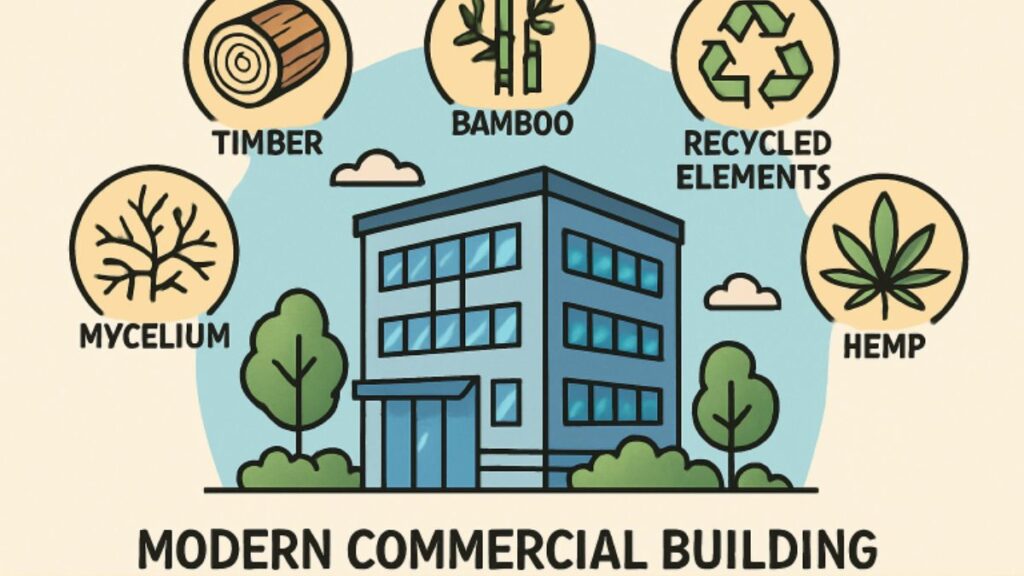
The move toward sustainability in commercial construction is reshaping the industry at a rapid pace. By integrating environmentally friendly materials, contractors and developers not only reduce resource consumption but also elevate building performance and durability. A growing number of owners and decision-makers are seeking out commercial renovation services Montgomery County, MD that prioritize sustainable practices and forward-thinking design strategies.
What makes this shift compelling is that sustainable construction is no longer just an ethical choice; it represents a practical one that delivers clear financial and health-based benefits. These materials lead to more energy-efficient spaces, improve indoor air quality, and can even add long-term value to commercial properties.
City planners and property managers are discovering that implementing green materials in commercial projects substantially lowers carbon emissions. With global initiatives like the Paris Agreement pressing industries to reduce their footprints, sustainable building has become a top priority, both to comply with regulations and to attract tenants seeking greener workspaces.
Incorporating eco-friendly products and innovative materials not only future-proofs commercial developments but also signals to clients and customers that sustainability is more than a trend. It is a standard for the modern built environment.
Cross-Laminated Timber (CLT)
Cross-laminated timber is rapidly evolving as a powerful alternative to conventional materials like steel and concrete. Made from sustainable forests, CLT consists of wood planks stacked perpendicular to each other and bonded with a strong adhesive. This configuration gives it outstanding dimensional stability, making it ideal for load-bearing elements in multi-story commercial structures. Beyond structural integrity, CLT stores carbon dioxide, creating a long-term carbon sink inside the building.
Projects employing CLT benefit from its flexibility and lighter weight compared to concrete, which can lower transportation costs and reduce the need for deep foundations. As its popularity grows in North America and Europe, CLT is transforming architectural possibilities while lowering the environmental toll of large-scale construction.
Mycelium-Based Panels
Mycelium, the intricate root network of mushrooms, is turning heads for its capacity to create strong, biodegradable panels suited for insulation and interior design. In countries like Kenya, innovations such as MycoTile merge agricultural waste, mycelium, and natural fibers to address both environmental concerns and affordable housing needs. These panels are inexpensive, have minimal embodied energy, and naturally break down after use, reducing landfill impact. The idea is gaining traction as the construction sector looks to bio-based materials as scalable alternatives to traditional synthetics.
Recent initiatives have attracted attention in global news outlets.
Algae-Based Concrete
One of the most exciting breakthroughs in sustainable construction is algae-based concrete. Instead of relying on cement, which requires significant energy and emits large amounts of carbon dioxide, algae-based products harness photosynthetic microorganisms. These microorganisms form a cement-like matrix with a notably smaller carbon footprint. Companies like Prometheus Materials have pioneered concrete bricks that are expected to reach the market soon, opening new opportunities for sustainable architecture.
Algae-based concrete aligns with global sustainability agendas by absorbing carbon during its production. As detailed in Time Magazine, this innovation represents a promising advance for cities aiming to lower emissions while supporting resilient infrastructure.
Recycled and Upcycled Materials
Recycling and upcycling are vital strategies for reducing waste in commercial building projects. These processes repurpose discarded materials such as reclaimed wood, used steel, and crushed concrete from old buildings, slashing demand for virgin resources and reducing landfill volumes. Even plastics are now being shredded, melted, and incorporated into durable construction panels and high-performance insulation materials.
The growing use of upcycled building products is also helping tackle the plastic pollution crisis and enabling new circular economy business models. As outlined by National Geographic, unlocking new value from construction waste is becoming an essential step for sustainable cities.
Hempcrete
Sustainability and superior insulation properties define hempcrete, a composite made from woody hemp fibers, lime, and water. It performs exceptionally well at thermal regulation, reducing heating and cooling demands in commercial spaces. Hempcrete is also carbon-negative because the plants absorb carbon dioxide throughout their life cycle, and as the hempcrete cures. The material is both lightweight and breathable, making it suitable for retrofitting older structures or for new constructions seeking advanced indoor air quality and efficient temperature moderation. Its widespread adoption could substantially reshape the environmental impact of commercial construction.
Bamboo
Known for its rapid regrowth and remarkable strength, bamboo is another ecological powerhouse now making inroads in commercial projects. Engineered bamboo can rival steel’s tensile strength and match concrete’s compressive force. It is being fashioned into beams, wall assemblies, and even concrete reinforcement, especially in earthquake-prone locales, where its flexibility offers significant advantages.
Modern preservation and treatment processes also enhance bamboo’s durability, making it suitable for long-lasting structures. Architectural firms are using bamboo in both decorative and structural roles, often in combination with other sustainable materials, to craft remarkable, resilient spaces.
Final Thoughts
Commercial construction stands on the brink of a remarkable transformation through the use of sustainable building materials such as CLT, mycelium-based panels, algae-based concrete, recycled materials, hempcrete, and bamboo. By choosing these alternatives, developers and business owners contribute directly to a healthier planet, lower operational costs, improved occupant health, and modern aesthetics. With regulations tightening and occupants demanding greener environments, embracing these materials is not just an act of responsibility; it unlocks long-term value and enhances the fabric of our built environment.