
When upgrading your home, choosing the right window material can significantly impact both style and longevity. Homeowners are often faced with an array of window material options, each offering varying lifespans, maintenance requirements, and energy efficiency levels. Carefully weighing these factors is essential to achieving a balance between aesthetics, durability, and budget.
Materials such as wood, vinyl, aluminum, and fiberglass each offer unique benefits and challenges. Understanding the expected lifespan and care needs of each can help homeowners avoid costly mistakes, support efficient home energy usage, and ensure lasting curb appeal. In making this decision, it is important to consider specific climate challenges, investment expectations, and ongoing maintenance needs. Companies like JDI Windows provides expert guidance on selecting the ideal materials and styles to match your home while maximizing energy efficiency and long-term performance.
Proactive maintenance and regular inspections can greatly extend the life of your windows while also maintaining their appearance and performance. To maximize your investment, familiarize yourself with the strengths and potential drawbacks of each window material, how environmental factors affect them, and key signs that indicate it is time for a replacement.
Wood Windows
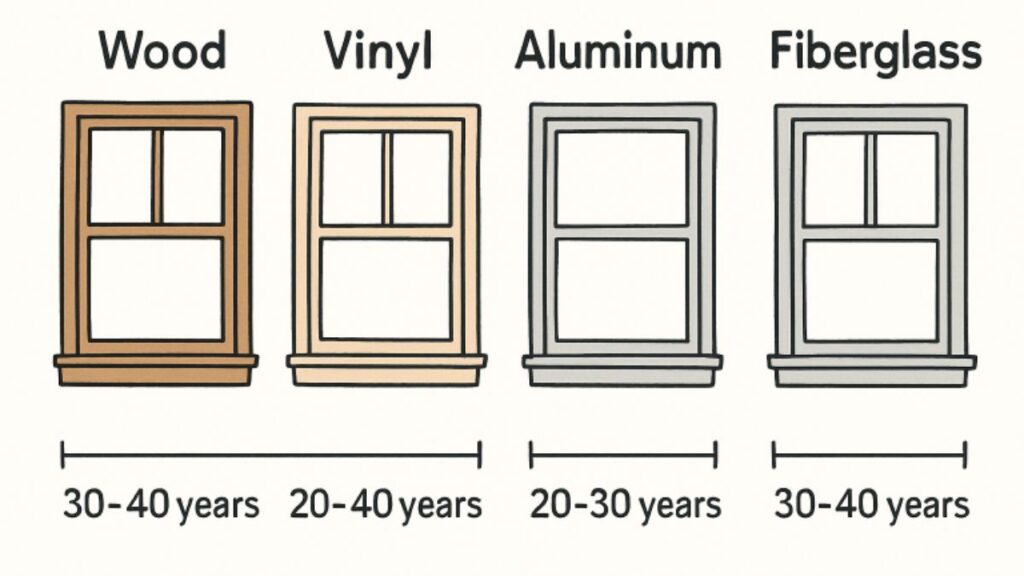
Wood windows are often chosen for their natural beauty and timeless appeal. With attentive care, wooden windows usually last between 15 and 30 years. However, maintaining their structural integrity involves regular painting, staining, and sealing, which helps guard against moisture intrusion, rot, and unwanted pests. Neglecting routine care can cause wood to deteriorate rapidly, leading to potentially expensive repairs or replacements. In return for proper upkeep, wood windows reward homeowners with classic charm and customizable options.
Vinyl Windows
Vinyl has become a leading choice for replacement windows in recent years due to its affordability, reasonable durability, and minimal maintenance requirements. High-quality vinyl windows can last 20 to 40 years, depending on environmental conditions and the manufacturer’s workmanship. Vinyl does not require painting and is resistant to rotting, but can become brittle or discolored in areas with extreme sunlight or fluctuating temperatures.
Keeping vinyl windows clean and periodically inspecting seals and frames for warping or water infiltration is usually all that is needed to maintain performance. Homeowners appreciate the cost savings and practical aspects, though vinyl’s appearance and customization options may be somewhat limited compared to wood.
Aluminum Windows
Aluminum windows are known for their modern look, light weight, and impressive structural strength. On average, aluminum frames last 15 to 30 years, making them comparable to wood in terms of longevity. These windows are popular in contemporary homes and commercial buildings where large expanses of glass are desired. Aluminum is not susceptible to rot or insect damage, but it may corrode over time, especially in coastal or humid climates, if not properly coated and maintained.
Aluminum windows are relatively easy to maintain, typically requiring only occasional cleaning. However, aluminum is not as energy-efficient as other materials without a thermal break or insulation.
Fiberglass Windows
Fiberglass windows are well-regarded for their extreme durability and longevity. Of all the mainstream window materials, fiberglass lasts the longest – typically between 30 to 50 years or even longer with proper installation and care. This material stands up well to temperature fluctuations, resists swelling, warping, or shrinking, and is highly energy-efficient. Fiberglass is also a low-maintenance option, rarely requiring more than periodic cleaning to keep frames looking sharp.
Another advantage is that fiberglass windows can be painted and styled to mimic natural materials, providing both aesthetic flexibility and resilience. With higher upfront costs, these windows are often best suited for homeowners seeking a long-term investment in their property.
Factors Influencing Window Lifespan
- Climate: Windows face unique challenges in different locations. Exposure to extreme heat, frigid cold, moisture, or salty air can accelerate wear and tear, especially for wood and aluminum frames.
- Installation Quality: Professional installation is essential. Poor fitting or sealing can allow water intrusion, causing hidden damage and shortening your window’s life.
- Maintenance: Regular cleaning, inspection for damage, and prompt repair of failed seals or finishes help maximize longevity for any material.
- Material Quality: Investing in higher-grade products often leads to a longer lifespan. Cheaper windows, regardless of material, may not endure as long as premium options from reputable brands.
Signs It’s Time to Replace Your Windows
Windows play a crucial role in home comfort, appearance, and energy efficiency. Knowing when to start planning replacements can prevent higher utility bills and protect your investment. Watch for these common signs:
- Windows that are difficult to open, close, or lock
- Drafts around the window or noticeable rises in your energy bills
- Fogging or condensation between multi-pane window glass
- Cracks, chips, rot, or visible water damage to frames or panes
Final Thoughts
Selecting the proper window material is an investment in both your home’s function and its visual appeal. By understanding typical lifespans and maintenance needs of wood, vinyl, aluminum, and fiberglass windows, you are better positioned to make a choice that fits your preferences and long-term goals. Regular maintenance and professional guidance ensure your windows look great and perform well for decades. Take the time to compare materials, and do not hesitate to consult specialists to support your decision-making process, ensuring your home remains both beautiful and energy-efficient for years to come.