
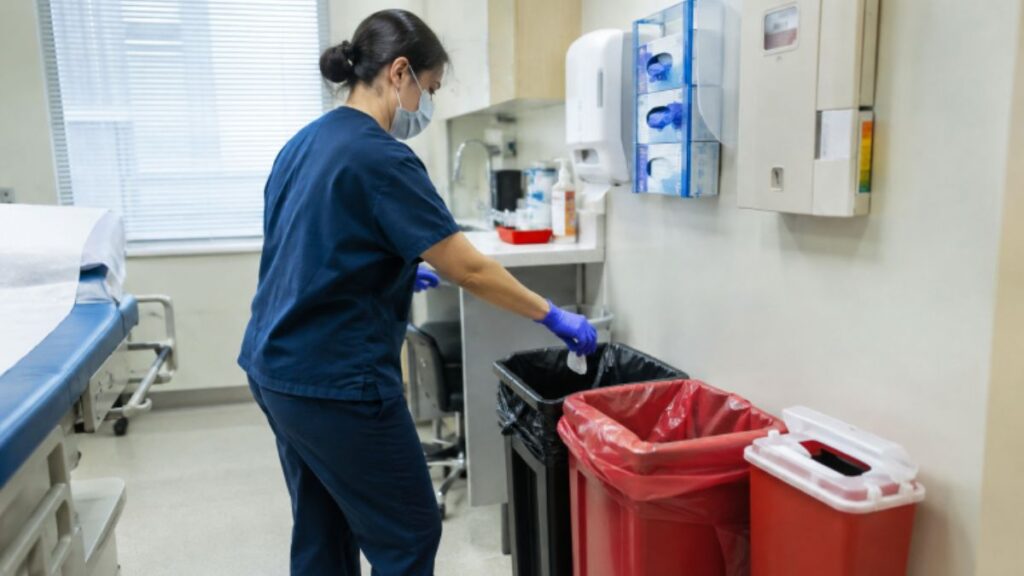
From small rural clinics to busy hospitals in Louisville, Lexington, Bowling Green, and beyond, Kentucky healthcare facilities create many types of waste each day. A clear healthcare waste segregation process helps protect patients, staff members, environmental services teams, and the wider community by ensuring materials enter the appropriate disposal stream from the start.
Good segregation is not simply a housekeeping task. It supports infection prevention, reduces unnecessary handling of potentially hazardous materials, and keeps ordinary trash from being treated as regulated waste without a valid reason. Because requirements can differ by waste type and jurisdiction, every facility should align its procedures with applicable Kentucky and federal rules.
Why Waste Segregation Matters
When waste is poorly sorted, employees may need to handle materials more than once, increasing the risk of exposure to sharps, body fluids, chemicals, or medications. The World Health Organization notes that most waste produced through healthcare activities is general, non-hazardous waste. At the same time, a smaller portion requires special handling because it may be infectious, chemical, radioactive, or otherwise hazardous.
In practical terms, an empty food container, a clean paper wrapper, or an ordinary office material should not enter a regulated stream simply because it was generated in a healthcare setting. Accurate sorting can help facilities focus specialized handling on the materials that genuinely need it. Kentucky organizations reviewing medical waste procedures should begin by identifying which items require regulated handling under their own policies and applicable regulations.
Common Types of Healthcare Waste
Healthcare waste categories should be explained in plain language. Local requirements and facility policies determine the final classification, but common categories include:
- General waste: Non-hazardous paper, food scraps, packaging, and similar materials.
- Infectious waste: Materials contaminated with blood, body fluids, cultures, or other potentially infectious substances.
- Sharps: Needles, lancets, scalpels, blades, and broken glass.
- Pharmaceutical waste: Unused, spilled, expired, or partially used medications.
- Chemical waste: Laboratory reagents, solvents, disinfectants, and certain cleaning products.
- Pathological waste: Human tissues, organs, or anatomical materials that require specific handling.
- Radioactive waste: Materials associated with radioactive diagnostic or treatment procedures.
Why Sorting Starts at the Point of Use
The safest time to sort waste is immediately after it is created. Delaying the decision until a bag reaches a hallway cart or holding room adds handling steps and makes errors harder to correct. This matters in exam rooms, dental suites, laboratories, pharmacies, operating rooms, and patient-care areas where workflows move quickly.
Container placement strongly affects behavior. Sharps containers should be secure and easy to reach at the work area. General waste, regulated waste, and recycling containers should also be located where staff can use them without interrupting a task. If the right bin is inconvenient, rushed disposal decisions become more likely.
Building Clear Bin, Label, and Training Systems
A practical bin system should remain understandable during a busy shift, including for new hires, contractors, students, and temporary workers. Consistency is more useful than a complicated design.
- Use the same container colors and terminology across the facility where possible.
- Place large written labels near each opening, not only on the side of a container.
- Add simple images of items that are frequently misclassified.
- Replace damaged, leaking, or overfilled containers promptly.
- Post short sorting guides in areas where waste is generated.
Color alone is not enough because color conventions are not universal. Written labels and site-specific instructions should always support the visual system. The safe management of health-care waste also depends on staff awareness and on suitable containers, storage, transport, treatment, and disposal practices.
Keep Training Short and Repeatable
One orientation session rarely covers every real-world decision. Brief refreshers during safety huddles, annual reviews, and department meetings can reinforce expectations without overwhelming staff. Training should use common materials found in the facility and explain what to do when an item does not clearly fit an existing category. Employees should also have a simple way to report missing bins, confusing signs, and recurring sorting issues.
Safe Storage and Internal Transport
Correct disposal at the point of use is only the first step. Waste containers should remain closed when appropriate, stable during movement, and protected from unauthorized access. Internal routes should limit unnecessary contact with patients, visitors, food service areas, and clean supplies.
Before transport, staff can inspect containers for damage, leakage, improper closure, and overfilling. Facilities also benefit from clear pickup schedules in high-volume areas. Spills, rejected loads, damaged containers, needle injuries, and exposure incidents should be documented and reviewed so procedures can improve.
How Segregation Supports Sustainability
Accurate classification is the starting point for a smaller waste footprint. When ordinary materials are put into regulated containers, they may require additional transportation, treatment, and disposal that would not otherwise be necessary. At the same time, sustainability efforts must never weaken infection prevention, worker safety, or compliance obligations.
The U.S. Environmental Protection Agency explains that state environmental and health departments primarily regulate medical waste programs, and that requirements can vary by state. Facilities should therefore review applicable Kentucky requirements before changing treatment, recycling, or disposal practices.
Use Audits and Data to Find Weak Spots
Simple recurring audits can reveal where a system is unclear. Choose a few departments with different waste patterns, review container locations and labels, and record any visible errors without turning the exercise into a blame game. Useful measures may include regulated-waste volume, full-container observations, spill reports, sharps injuries, training completion, and frequently misclassified items.
Ask staff what makes correct sorting difficult. A bin that is too far away, a label that uses unfamiliar terms, or a newly introduced product may explain a pattern more clearly than a volume number alone.
A Simple 30-Day Action Plan
Week One: Review the Current Process
- Map where waste is created, stored, moved, and collected.
- List containers, labels, and the most common sorting problems.
Week Two: Improve the Work Area
- Move bins closer to the tasks that create waste.
- Replace unclear signs and inspect sharps container placement.
Weeks Three and Four: Train, Measure, and Adjust
- Provide short department-level refreshers using local examples.
- Repeat the audit, gather feedback, and retain changes that improve accuracy.
Frequently Asked Questions
What is the most important rule in healthcare waste segregation?
Place waste into the appropriate container where it is generated. This reduces unnecessary handling and avoids later sorting decisions.
Why does general waste end up in regulated containers?
Common causes include unclear labels, inconvenient bin placement, inconsistent training, rushed workflows, and uncertainty about classification.
Who should participate in a waste segregation program?
Effective programs typically involve clinical teams, infection prevention, environmental services, pharmacy, laboratory staff, safety personnel, facilities staff, and leadership.
Final Takeaway
For Kentucky healthcare facilities, waste segregation works best as a daily safety practice rather than a once-a-year compliance project. Clear labels, nearby containers, regular training, secure transport, and focused audits can help teams reduce errors while protecting people and supporting responsible resource use.